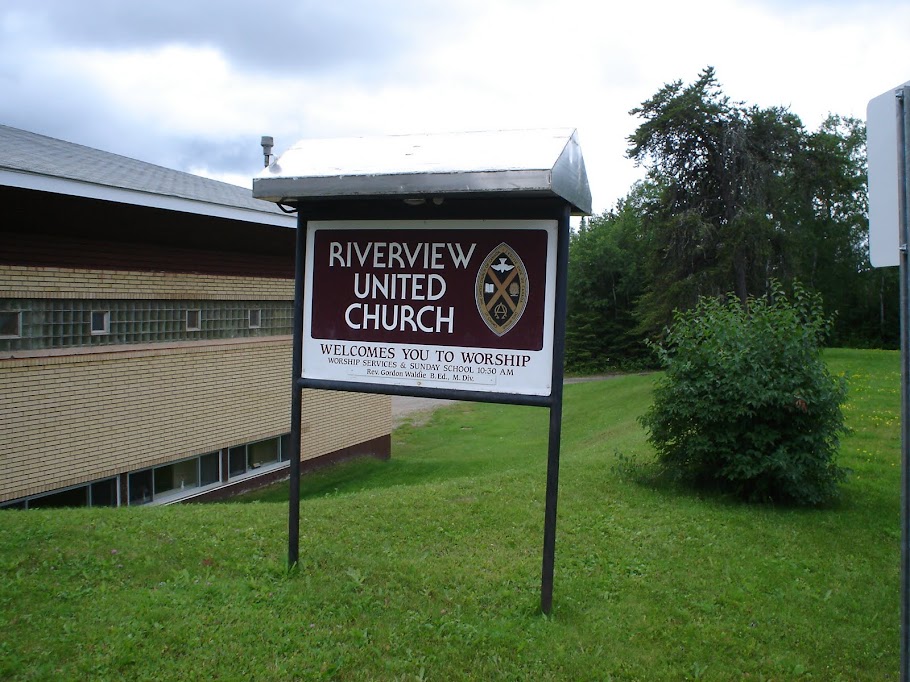
August 27, 2007

Looking Ahead to September 2, 2007 -- 14th Sunday after Pentecost, Labour Day Weekend

Our worship this Sunday will revolve around labour and why we work

The Scripture Readings this Sunday are:
  • From the Jewish Scriptures: Jeremiah 2:4-13
  • From the Jewish Scriptures: Isaiah 55:1-3c, 10-13
  • Psalm 81:1, 10-13
  • From the Gospel: Luke 12:22-32

The Hymns this week are:

  • 222 Come Let Us Sing
  • MV #162 Christ Within Us Hidden (insert)
  • 660 How Firm a Foundation
  • 884 You Shall Go Out with Joy (sung twice)

The sermon title is For What do you Labour?

Early Thoughts: Why do you spend your money for that which is not bread, and your labor for that which does not satisfy? (Isaiah 55:2)

Good question isn't it? Why do we labour and labour and seem to have such trouble finding happiness or comfort? Or, as Jesus asks, why do we worry all the time? On Labour Day weekend it seems important to pause and think about what our labour means to us.

Of course we labour, in part, to provide for ourselves and our loved ones. Jesus may speak eloquently about the birds of the air and the flowers of the field but the reality is that we have to do more than simply trust the what we need will be provided.

And we labour at things we love, things we find are important. Remember that not all of our labour is paid, that not all of our labour is work/career. Parenting is labour, serving on community boards is labour, taking time for self (reading, walking -- whatever one does for refreshment) is also labour. It is of course hoped that some of this labour brings re-creation, that some of our labour is re-energizing as well as draining.

But the reality experienced by so many is that labour is labour is tiring. So many of us find ourselves exhausted by the labour we do for sustenance and by the labours of love. Why? Are we infact going for the things that do not satisfy? Have we built cracked cisterns that are unable to hold the refreshing water of life?

As I look around I think that many of our cisterns are not only cracked but split wide open. IT is so easy to get trapped in the endless cycle of doing, doing, doing without pausing to experience life. IT is so easy to forget that life is meant to be more than that.

The words of Isaiah and Jeremiah tell us of people who have lost their way. They talk of people who have lost (or abandoned) the connection with God. Their choices take them away from the promise and into the land of dry water and unfulfilling purchases. But they also point us to the cure.

The cure is to find the balance of our labour. The cure is to remember that our labour isn't meant as busy work, but that it is to bring us what we need. The cure is to remember that God is part of the labour, that unless we let God work in us (which is hard when we are constantly ont he treadmill of busyness and worry) we will not find that which we truly need. The cure is to trust that God will help us get what we truly need (if not everything we want) When we do that then we too can go forth with joy and celebration -- dancing trees and all.

But I am still dubious about living like birds and flowers. That level of trust seems a little bit beyond my capability.
--Gord

August 20, 2007

Looking Ahead to August 26, 2007--13th Sunday After Pentecost

The Scripture Readings for this Sunday are:
  • Jeremiah 1:4-10
  • Psalm 71:1-6 (VU p.789 Part One)
  • Luke 13:10-17

The Hymns are:

  • #245 Praise the Lord with the Sound of Trumpet
  • #357 Tell Me the Stories of Jesus
  • #624 Give to Us Laughter
  • 646 We Are Marching (sung twice)

The Sermon Title is Stand Up, Stand Up through Jesus

Early Thoughts: So many years of struggle. So many years of pain. 18 years of being bent over and oppressed. That is the situation in which this woman finds herself. And the story is about how she finds freedom. Yes there is a debate about how to mark the Sabbath but from the perspective of this "daughter of Abraham" the story is about the day she was set free.

Freedom, that is one of the greatest gifts the Messiah brings, freedom from what oppresses or holds you down. Indeed that freedom is one of the ways we are brought back into full relationship with God and neighbour, it is part of the at-one-ment process.

So many of us are bent over in so may ways. Sometimes we don't even know it until something happens and we can stand straight again. Sometimes our bondage is so subtle, or so complete, or so overwhelming that we accept it as "normal". I have a suspicion that this woman must have felt that her condition was now normal after all that time. But even tehn there is still a chance for freedom.

So what is bending you over? What load keeps you from being able to be who you truly are? And more to the point, what would it mean to be freed from that load?

In the old hymn by GEorge Duffield we read:

Stand up, stand up for Jesus,
stand in his strength alone;
the arm of flesh will fail you,
ye dare not trust your own.
Put on the gospel armor,
each piece put on with prayer;
where duty calls or danger,
be never wanting there.
In the strength of the Christ we are freed from our bondage. In the armour of prayer and Divine relationship we are able to stand tall. And when we are set free, we can accomplish great things. May God help us on the road to freedom and relief.
--Gord

August 19, 2007

NEws From National Offices

Earlier this summer (in June in fact) the General Council Executive had a special meeting to set priorities and plan for the next few years.

The fallout of this meeting is that there are a number of changes coming up. Most notable is the elimination of 27 positions (with 7 new ones created for a net change of 20). Also notable is that Berkeley Studio, the audio-visual production wing of the United Church of Canada, is slated to be dismantled totally (this includes the end of Spirit Connection, the United Church's TV show).

It appears that much of this change is financially driven. The level of funding available requires that priorities get set and some work is cut away. You can read more about these changes here and here

Currently there is a degree of debate about what is being lost with these changes and a number of letters have been sent to the General Council Offices and to all of the commissioners from last year's General Council meeting. Some of that debate can be found here.

It is very likely that more information about theses changes is coming. Watch for the September and October issues of the Observer to have a say (especially in the Letters section)

August 16, 2007

Christmas Eve Drama

Yes I know it is nowhere near Christmas. But here is a dramatic sermon from last Christmas Eve.

Christmas Eve Drama (3 roles)
Premise: 3 residents of Bethlehem are discussing the strange events that have taken place over the last couple of days. One (Samuel) is the owner of the stable/cave where Mary and Joseph eventually found refuge. One (Miriam) is a local midwife who was called to help Mary give birth. The third (Eli) is a leading towns-person who is frankly disgusted with all the fuss and mess.

The scene opens with Eli running into Samuel on the street.
E: Samuel! What was all that fuss over at your stable last night? I mean shepherds running around, people yelling, singing. Woke me from a dead sleep it did.
S: Sorry ‘bout that m’lord. But really I haven’t quite figured it out myself. All I know is that I let some wandering couple use the stable to sleep in. Then everything went crazy. Ah, here comes the midwife, maybe she heard something.
M: (enters pointing accusingly at Samuel) You! How dare you push a poor pregnant woman out like that?!? Going into labour and you make her sleep with cattle! Have you no shame?!?
S: Well...I…uh…I had no choice. There was no room I could give them.
M: But they were family! Descendants of David just like you! You couldn’t even find room for family in trouble??? (turns to Eli) And you! You with your great big house, how many travellers have you taken in these last few days.
E: Descendants of David, please. Half of the people in Judea claim to be descended from David. If I were to try and help all of them I would beggar myself. Besides, these travellers are dirty and unkempt. I mean some of them have even come from Galilee! Almost as bad as coming from Samaria if you ask me.
S: Exactly. I tell you, my inn was full! I even had people sleeping on the floor in the common room. It’s this blasted census I tell you. You want to blame someone? Blame the Romans!
M: That’s no excuse. If you paid attention to the Scriptures you would know that you are supposed to look out for those who have nothing. Imagine, making a woman give birth in a cold smelly cave surrounded by horses and cattle. Terrible I tell you, terrible.
E: I’ll thank you to keep your place Miriam. No woman is going to instruct me in the Scriptures. Wait, did you say give birth?
M: That’s right I did. In the middle of the night a boy came to my door saying that there was a woman in labour who needed my assistance and could I come right away. So of course I did. Unlike some people I have no qualms about helping strangers in trouble.
S: Seriously, I had no rooms left, unless I was supposed to give up my own bed… (Miriam just glares at him)…well okay I guess I could have done that. But how was I to know the woman was going to give birth last night? For all I knew she was pretending to be pregnant to get sympathy!
M: (disdainfully) You keep telling yourself that if it makes you feel better.
E: Hey, was this the couple with the donkey I ordered out of my front yard earlier? Yeah, I wondered where they ended up. So she did have the baby.
M: She sure did, no thanks to either of you. But it was a strange birth if I do say so.
E: Strange? What do you mean?
M: Well, you know I have helped many children come into the world. And a lot of the time the parents thank God for the child. But this one was different. As the baby was born they kept calling him the Child of God, over and over again. And they were both so peaceful. Even in the worst of the labour Mary was so peaceful.
S: Yeah, when they were asking if I had room they said something about this baby being special. But hey, everyone says that. And I really had no room left. I thought I was doing pretty good by letting them use the stable. You know I had four men offer me gold to let their horse stay there? And those two stayed there for free.
M: (sarcastically) oh yes you are a real saint.
E: Well then this birth is what all the fuss was about. But why? I mean it’s not like they are the first people to have a baby. Not even the first to have a baby in less than ideal circumstances. Why did this baby mean that I woke up to find shepherds running through my property shouting and singing at the top of their lungs?
S: I heard something about angels, something about the birth of a Messiah. I think that they were praising God for the gift of a Saviour.
M: That is what they said to me. They talked about angels appearing to them while they sat and talked on the hills. Said that the angels had told them this baby was the Messiah.
E: ANGELS??? God sent messengers to SHEPHERDS???? What had they been drinking? Surely God’s Messiah wouldn’t be born in a stable. And surely the announcement would have been made in the temple in Jerusalem, not to a bunch of filthy smelly shepherds on a hillside.
S: I am sure you are right Eli. And the priests would have been there. But I know these shepherds. They may get drunk and rowdy at times but never when they are out in the fields. They take seriously their duty to care for the flocks.
E: They better! Those were my sheep they were watching!
M: No, they weren’t drunk. They didn’t really appear clear headed either but the certainly weren’t drunk.
S: Miriam, you saw the baby. You saw the parents. You heard what the shepherds said. What do you think? Could it be the Messiah?
E: Why would she know? You have to ask the proper authorities. They are the ones qualified to understand the Scriptures and what God is doing.
M: You mean the priests and the temple.
E: That’s right. They are the ones who work near the Holy of Holies. They are the ones who are clean and worthy. No offence Miriam. I know you are a good midwife. But you have to admit that you are not qualified to be making statements about religion.
Miriam just sputters in rage, there are no words…
S: Actually Eli I am not so sure. As I remember the stories, God often chose some most unlikely people. Even our great ancestor David was an odd choice. And then the prophets like Amos or Hosea. Maybe God could choose to use shepherds…
M: Exactly Samuel. Even David was nothing more than a shepherd boy at one point. And God uses women too Eli. Remember Ruth, and Esther, and Deborah? It is more relevant to ask why God would even think to use someone as arrogant as you or your friends as messengers. You high and mighty types think that you have all the answers. But I saw that child. I talked to his mother. There are things you people will never understand.
E: Miriam! How dare you talk to me that way?
M: How dare I? I dare because last night I met God face to face. I dare because in watching that baby I understood that God wants us to care for each other. That’s right, to care for people even if they are strangers from Galilee or poor, rowdy, unclean shepherd from the hillsides.
S: So Miriam, you do believe what the shepherds said? You think this child is God’s Chosen One? Can it really be true?
E: Don’t believe her Samuel. When the Messiah comes he will be a mighty king, ready to drive out the Romans. Do you really think small baby born to a ragged couple from Galilee could be a mighty king? Please be realistic.
S: I wish I could be as sure as you are Eli. But I talked to those shepherds last night. They all saw something out there. And look at Miriam’s eyes. Something special happened in that stable last night.
E: Nonsense. I tell you the shepherds were likely drinking, and Miriam is overtired, she is raving. No good can come from all this talk about Messiahs and kings I tell you. It was just another baby born. That’s all. (he storms off)
M: Samuel, yes I do believe. In some ways Eli is right, it makes no sense. But still I believe. This baby I helped bring into the world last night is the Promised One.
S: Take me to them Miriam. Let me see for myself and see what there is to see. Oh, and I believe that I may have room for them to stay tonight.
M: That would be a good thing Samuel. See, already the baby Messiah is making a difference in the world – he has softened your heart and you have yet to see him.
S: He has, through you Miriam. Your words about him have made me hope. Now, let us go and bring them back to my lodging. (they leave).

July 27, 2007

CONCERT COMING!!

On Sunday November 18, 2007 at 7:30 Rverview United Church is pleased to host Bruce and Cheryl Harding in concert.

More details will follow later in the fall but for more about Bruce and Cheryl please visit their website

July 17, 2007

Looking Ahead to July 22, 2007 -- 8th Sunday After Pentecost

The Scripture Readings for this Sunday are:
  • Genesis 18:1-10a
  • Psalm 15 (VU p.736)
  • Luke 10:38-42

THe Hymns for this Sunday are:

  • #374 Come and Find the Quiet Centre
  • #357 Tell Me the Stories of Jesus
  • #506 Take My Life and Let it Be
  • #422 God Be With You till We Meet Again

The Sermon title is They Also Serve...

Early thoughts: So how many of you finished the saying, adding in "who stand and wait"? And really on the face that seems to be what Jesus is saying to Martha. Actually the text goes farther, it has Jesus telling Martha in no uncertain terms that she is wrong, that Mary has made the "better choice".

But really which is the better choice? This story about two sisters trying to meet and greet Jesus the best way they know how. Martha is drawn to be the "proper" hostess, Mary is drawn to be the avid student. It is a contest between two differing styles of hospitality. It is also a story about seeking a balance between doing and being.

It seems that this is a conflict many people face in the here and now. Do we struggle to keep our houses perfectly clean to make a good impression or spend more time with family and friends? Is it more important to have a perfect meal well laid out or to have good conversation? What is the balance point?

In fact the balance point is hard to find sometimes. We need both Mary and Martha in our lives. We need them in our churches. In fact we as individual need to be both. We need to take time to "do", to be preparing for company, to have many tasks. But we also need to take time to just "be", to have the deep conversations, to sit "idly by", to stand and wait.

A few years ago I was asked to speak on this passage when the UCW Rally was held here at Riverview. And to me it seemed the perfect setting because UCW groups, when they work well, are all about being both Mary and Martha. UCWs do many things in the life of the church but they take time at every meeting for a devotional. SOme take time at many meetings for a Bible Study (or used to anyway). UCW members often have strong ideas about what it means to provide hospitality, in fact many of us could learn from them. But I have also known many UCW members who have a lot to teach about being with their guests, about how hospitality is more than the meal getting out on time.

In our story it seems that both Mary and Martha may be off-balance. MArtha is distracted by many tasks, Mary is seemingly oblivious to what needs to be done (note that the text doesn't say if Martha is preparing a multi-course meal or simply getting out come bread and cheese with some water to drink). True hospitality takes both gifts. And from ancient times we have been handed on the challenge of learning how to be truly hospitable.

May God help us learn how to be truly balanced hosts.
--Gord

July 10, 2007

Looking Ahead to July 15, 2007 -- 7th Sunday After Pentecost

This Sunday we celebrate the sacrament of Baptism.

The Scripture readings this week are:
  • Deuteronomy 30:9-14
  • Psalm 82 (VU p.799)
  • Luke 10:25-37

The hymns are:

  • #333 Love Divine, All Love’s Excelling
  • #365 Jesus Love Me (or possibly #644 I Was There to Hear Your Borning Cry)
  • #579 The Church is Wherever
  • #675 Will Your Anchor Hold

The Sermon title is: Mercy For and From an Outsider

Early Thoughts: It is a story many of us have heard countless times. "A man was going down from Jerusalem to Jericho...which of these three, do you thingk, was a neighbour to the man who fell into the hands of the robbers?" The beauty of stories we have heard over and over again is that they are so familiar and comfortable. The danger of stories we have heard over and over again is that they are so familiar and comfortable.

Of course, one might say, everybody knows the meaning of the parable of the Good Samaritan. The point is that we have to think beyond our regular boundaries, that we have to be willing to provide loving support for those neighbours we would instinctively pass by on the road. Every Sunday School re-enactment and discussion, most every semon preached on the story picks up that fact. Sure, sometimes we pause to ruminate on why the priest and the Levite didn't stop to help (were they too busy, too preoccupied, too "holy"?) and we pause to reflect what might have been the motivation for the Samaritan, but the base message is still the same. And of course that is part of what is being said.

But the thing about parables is that they are often not as simple as that. I have to wonder what Jesus' original hearers would have felt had they been the man beat up and left for dead. When he wakes up and learns that he has been helped by a hated Samaritan. Even worse, he has been touched by a hated and unclean Samaritan. Is it possible that Jesus is asking his listeners to move even beyond charity to actual acceptance?

The story is prompted by questions around love and neighbour and fulfilling the law. In Scripture love is a verb, something we do and so Jesus tells a story about love acted out. As is often the case there is a twist, in this case the "good" one in the story is a Samaritan, someone few Jews of the day would consider a neighbour. But the love that Scripture calls us to also goes deeper. On the face of it, this story calls us to be charitable, and that is a good thing. But true love, agape to use the Greek term for the deep abiding love we are called into, involves an acceptance of the other, not just caring for his/her welfare. Indeed that is the really big challenge.

I think Jesus is saying that to be a neighbour means not only caring for each other. I think Jesus is saying that the "victim" of the story has a choice to make as well. And I think the his Jewish listeners may well have heard that choice much clearer than we do today. There is a double miracle of love and neighbourliness here. One certainly is that mercy was offered by an outsider. The other is that it was accepted.

In our world of separations and divisions today, what would it take for us to accept and offer aid no matter who the other is?
--Gord

July 09, 2007

This is worth reading...

This essay was almost enough to change the shape of this week's sermon. WE are still going with the Good Samaritan (more tomorrow) but this is a great look at Amos and the politics of empire.

July 03, 2007

Looking Forward to July 8, 2007 -- 6th Sunday After Pentecost

The Scripture Readings for this week are:
  • Psalm 66:1-12 (VU p. 784, Parts 1 & 2)
  • Luke 10:1-11, 16-20

The Hymns are:

  • #371 Open My Eyes That I May See
  • #509 I, the Lord of Sea and Sky
  • #660 How Firm a Foundation
  • #649 Walk With Me

The Sermon title is Travelling Light.

Early thoughts: Many years, as we prepared to leave on vacation, my father would look at the pile of stuff waiting to be packed into trailer and trunk and let out a sigh. Sometimes it took 2 or 3 attempts to find the best way to fit everything in. It is a scene that many of us have been a part of. The "why did we pack so much" part of vacations.

The answer of course is that we take what we think we need to be adequately prepared for the trip. Will it be hot and sunny or cool and rainy? Will we be sitting on the beach, hiking in the bush, or going out to fancy restaurants and theatres? Do we have enough food and refreshments? The more variables we want to cover the bigger the pile grows.

In contrast look at the packing instructions Jesus gives to the 70 who are going out in pairs to preach and prepare the way. "Carry no purse, no bag, no sandals...Whatever house you enter, first say, ‘Peace to this house!’ And if anyone is there who shares in peace, your peace will rest on that person; but if not, it will return to you. Remain in the same house, eating and drinking whatever they provide." Go out, take nothing, trust that when you get there someone will provide what you need. Now I am certainly in favour of travelling light (having had the "how will all of this fit in" experience myself) but this seems more than a little extreme.

These travel instructions are of course based on trust. The 70 have to trust that God will, through the people they meet, provide what is needed. And that is what strikes me as the Word for us as I read this passage this year. Yes there are other messages, there is a Word about sharing the Good News, there is a Word about our authority as apostles, but the Word about travelling light and trust is what strikes me this year.

This is the Word we need to hear because we spend much of our lives trying to be prepared for everything, trying to be able to have what we need. But Jesus tells us that this isn't the goal. The goal is to set out in trust. Yes it means we will be dependent on those we meet. Yes it means admitting we might meet something we aren't ready for. But that is life. Sometimes we need to let go and let God even though we know God tends to work through terribly fallible and sometimes unreliable means. We need to travel light, to not carry so much burden around. Then maybe we will find that we are freer, that we have more energy, that we can try new things.

When we pack too much the weight of all those clothes slows us down, makes us less efficient. Many of us find the same thing in our lives, both as individuals and as communities. When we try to, as the Boy Scouts say, "Be Prepared" the details and "what if"s bog us down. If we can find the space to step out in trust, assuming that we will find what we need and be well-received then great things can happen. At least that is what the 70 found out.
--Gord

June 30, 2007

Coming Attractions

Between now and June there are a variety of things happening in the life of Riverview. If you click on "Read More" you can find out what they are.
(Scroll down to read new posts, this will stay on top until the end of June)

April 1: UCW Ham Supper at 5:30pm
April 6: Good Friday worship at 10am, Ecumenical walk starts from Riverview at 11am
April 8: Easter Celebration and Communion Service
April 15: Guest Preacher from the Gideon's
April 21: UCW Rally in Fort Frances
April 22: Soup and Sandwich lunch. Film and discussion at 1:00pm. We will be watching An Inconvenient Truth
April 27-28: Living the Welcome event in Thunder Bay

May 3: Extended Care worship at 10:45am
May 5: Music in worship workshop at Knox United in Fort Frances 10-2
May 6: Camping Sunday
May 7: UCW meeting at 7pm
May 10: CHurch Yard Clean Up 6pm
May 13: Stump the Preacher in worship, Mother's Day brunch following worship
May 27: Pentecost Sunday, Communion will be celebrated

May 31-June 3: Conference Annual Meeting in Dauphin
June 4: UCW Meeting
June 13-15: Cambrian Presbytery Executive Face-to-Face meeting
June 17: Father's Day BBQ
June 24: Outdoor worship and Church Picnic